 Nederlands
  Français
  Deutsch
  Italiano
  Español
  Português

Historical Context
Amsterdam developed around the Amstel River, where a small medieval settlement gradually grew into an important trading city. Some of the oldest parts of Amsterdam can still be found around De Wallen, Warmoesstraat, Nieuwmarkt, and the Oude Kerk, where the street pattern reflects the city's medieval origins.The city expanded substantially during the Dutch Golden Age in the 17th century. As Amsterdam became an important center of international trade, its population and wealth increased rapidly, leading to the construction of the Canal Belt.
The Herengracht, Keizersgracht, and Prinsengracht formed the three main canals of this expansion. Wealthy merchants, bankers, and other prominent residents built large canal houses along the waterways, while the canals also provided important routes for transportation, trade, and water management.
The historic Canal Belt remains one of the defining features of Amsterdam and is recognized as a UNESCO World Heritage Site. Many of the original canal houses, bridges, and streets have survived, and some of Amsterdam's most famous buildings and monuments can be found within the historic center.
Streets and Character
Amsterdam's city center is characterised by narrow streets, historic bridges, tree-lined canals, and distinctive canal houses. The Canal Belt provides some of the city's most recognizable views, with long waterways lined by historic buildings and houseboats. Several of Amsterdam's most beautiful bridges cross these waterways and form an important part of the historic streetscape.Historic Core
Dam Square and the streets around Central Station form some of the busiest parts of the center, with large numbers of visitors, shops, restaurants, and attractions. East of Dam Square lies De Wallen, Amsterdam's oldest neighbourhood and the area commonly known as the Red Light District.Its narrow streets and canals around the Oude Kerk form part of Amsterdam's medieval core and give the area a distinctly different character from the later Canal Belt. Continuing east leads towards Nieuwmarkt, the historic Waag, and Waterlooplein.
Western City Center
West of Dam Square, the city opens into the western part of the Canal Belt. The Nine Streets (De 9 Straatjes) form a compact network of streets crossing the canals between the Singel and Prinsengracht.Immediately west of the Canal Belt lies the Jordaan, a historic neighbourhood known for its narrow streets, small canals, hofjes, markets, brown cafés, and more residential atmosphere. Originally developed as a working-class district during Amsterdam's 17th-century expansion, the Jordaan has retained a distinct character despite becoming one of the city's most desirable neighbourhoods.
Southern City Center
The southern part of the center includes areas around Spui, the Flower Market, Rembrandtplein, and Leidseplein. Here, historic canals and residential streets gradually mix with some of Amsterdam's busiest shopping and entertainment districts.Eastern City Center
The eastern side of the center becomes noticeably less dominated by the major shopping streets. Around Waterlooplein, the Amstel, and the Plantage neighbourhood, visitors find a mixture of historic buildings, cultural attractions, markets, museums, and quieter residential streets.Further east, the Plantage is one of the greener parts of central Amsterdam and is home to ARTIS, Amsterdam's historic zoo, as well as several museums and cultural institutions.
Main Attractions in the City Center
Historic Core
Dam Square forms the historic heart of Amsterdam and is one of the city's most important public spaces. The square is home to the Royal Palace, the National Monument, and several other historic buildings and is within walking distance of many of the city's major attractions.Nearby, De Wallen contains the Oude Kerk, one of Amsterdam's oldest and most important historic buildings. Nieuwmarkt lies a short walk further east and is dominated by the Waag, a distinctive medieval building that originally formed part of the city's defensive walls.
Western City Center
The Anne Frank House is located along the Prinsengracht and is one of the best-known museums in Amsterdam. Its focus on Anne Frank, the Second World War, and the persecution of Jews also makes it an important destination for visitors interested in Amsterdam's history museums.Nearby, the Westerkerk is another important landmark in the Canal Belt, with its tall tower providing one of the most recognizable features of the Amsterdam skyline. Together with the Oude Kerk, Nieuwe Kerk, and numerous smaller religious buildings, it forms part of a diverse collection of historic churches in Amsterdam.
Southern City Center
The Begijnhof is a historic courtyard hidden in the heart of the city center, just off Spui and directly behind the busy Kalverstraat shopping street. The entrance for visitors is tucked away on Gedempte Begijnensloot, reached via the narrow Begijnensteeg from Kalverstraat.Despite being surrounded by some of Amsterdam's busiest central streets, its enclosed courtyard, historic houses, and churches provide a remarkably quiet contrast to the surrounding city. Visitors are expected to respect this peaceful residential environment by keeping noise to a minimum while inside the courtyard.
Other nearby landmarks include the Flower Market along the Singel, the Munttoren, Spui, and the southern sections of the Canal Belt.
Eastern City Center
Waterlooplein is one of the best-known squares in the eastern part of Amsterdam Centrum. The square sits close to the Amstel, the Jewish Cultural Quarter, the Stopera, and several historic streets and canals.Further east lies the Plantage neighbourhood, home to ARTIS, Amsterdam's historic zoo. The area has a greener and more relaxed character than much of the historic core and provides an easy transition between the densely built city center and Amsterdam Oost.
Restaurants, Cafés and Nightlife
The city center contains one of Amsterdam's largest concentrations of restaurants, cafés, bars, and entertainment venues. Dining options range from traditional Dutch cafés and brown cafés to international restaurants, casual eateries, and more upscale establishments.Historic Core
Around Dam Square, Nieuwmarkt, and De Wallen, restaurants and bars are densely concentrated and remain busy throughout much of the day and evening. Nieuwmarkt in particular has numerous cafés and restaurants surrounding the square and neighbouring streets.Western City Center
The streets around the Canal Belt, Nine Streets, and Jordaan contain numerous smaller restaurants, cafés, bakeries, brown cafés, and specialty food establishments. Canal-side terraces become particularly popular during warmer months, allowing visitors to eat or have a drink alongside the historic waterways.The Jordaan is particularly well known for its neighbourhood cafés, smaller restaurants, and traditional brown cafés, giving the area a more local atmosphere than many of the streets immediately around Dam Square.
Southern City Center
Leidseplein and Rembrandtplein are among Amsterdam's busiest entertainment districts, with large concentrations of bars, clubs, theatres, live music venues, restaurants, and other entertainment options.De Wallen has a different nightlife character, combining bars and late-night venues with the Red Light District for which the area is internationally known. Together, these areas form an important part of nightlife in Amsterdam.
Shopping, Markets and Leisure Activities
Historic Core
The city center is one of the main areas for shopping in Amsterdam. Kalverstraat and Nieuwendijk are the main shopping streets for larger international retailers, while smaller streets throughout the center contain specialty shops, cafés, and local businesses.Western City Center
The Nine Streets are one of the best-known shopping areas in the Canal Belt and are particularly associated with independent shops, fashion, design, vintage clothing, cafés, and smaller local businesses.The nearby Jordaan also contains numerous independent stores, galleries, markets, cafés, and specialty shops spread throughout its narrow streets.
Southern City Center
The Flower Market runs along the Singel and is one of the most recognizable markets in central Amsterdam. The surrounding streets also connect directly with Kalverstraat, Spui, and the southern Canal Belt, making this an easy area to combine shopping with sightseeing.Eastern City Center
Waterlooplein Market is one of the best-known markets in Amsterdam and is particularly associated with vintage goods, second-hand clothing, antiques, records, souvenirs, and other miscellaneous items.From Waterlooplein, visitors can easily continue towards the Amstel, Nieuwmarkt, the Jewish Cultural Quarter, or further east towards the Plantage and ARTIS.
Exploring the City Center
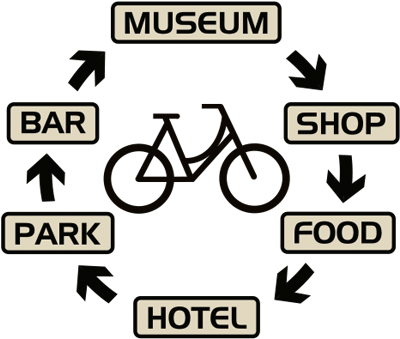
The compact layout of Amsterdam Centrum makes it easy to combine sightseeing, shopping, dining, cultural attractions, and markets within a single visit. Many of the main attractions are within walking distance of one another, while cycling provides an easy way to explore the canals and connect different parts of the center.A bicycle is particularly useful for moving between areas such as the Jordaan, the Canal Belt, Waterlooplein, the Plantage, and the southern city center without having to follow the busiest pedestrian routes.
Exploring Amsterdam from the water provides another perspective on the historic center. Canal cruises in Amsterdam range from larger guided sightseeing boats to smaller open boats and private cruises, while visitors who prefer to captain their own boat can choose a boat rental in Amsterdam and explore the waterways independently.
Character of the Area
Amsterdam's city center brings together several distinct parts of the city's history and character. The medieval streets around De Wallen and Nieuwmarkt contrast with the grand 17th-century Canal Belt, while the Jordaan feels different again with its smaller streets, canals, and residential character.To the south, major shopping and nightlife areas around Leidseplein and Rembrandtplein create a busier atmosphere. To the east, Waterlooplein and the Plantage provide a transition towards greener and generally quieter parts of central Amsterdam.
The center can become crowded around major attractions, particularly around Dam Square, Central Station, De Wallen, and the main shopping streets. However, visitors who explore the smaller canals and side streets can find quieter areas with a more relaxed atmosphere.
The character of the center also changes throughout the year. Many of the major annual events in Amsterdam bring celebrations, cultural activities, festivals, and public gatherings to the central streets, squares, and canals.
Amsterdam Centrum is compact enough to explore on foot or by bicycle, but varied enough that its different areas can feel surprisingly distinct. From the medieval core and busy central squares to the western Canal Belt, Waterlooplein, the Plantage, and the quieter canals of the Grachtengordel, exploring beyond the main streets reveals very different sides of the historic city.
From the city center, it is easy to continue into other parts of Amsterdam. Directly south, De Pijp offers a different side of the city, with the Albert Cuyp Market, a large concentration of restaurants and cafés, and a more residential atmosphere. Visitors travelling further from the historic center can also explore many of Amsterdam's parks by bicycle.
Use a bike your entire stay