Location: Amsterdam Zuid, directly south of the city center, between the Singelgracht, Amstel River, and the Museum Quarter.
De Pijp is one of Amsterdam's most densely populated and vibrant neighbourhoods. Originally developed during the late 19th century to accommodate the city's rapidly growing population, it has evolved into one of Amsterdam's most popular residential and entertainment districts. Today, De Pijp is known for its multicultural character, lively streets, diverse food scene, and proximity to many of Amsterdam's major attractions.
The neighbourhood combines historic architecture, green spaces, independent businesses, and a strong local atmosphere, making it attractive to both residents and visitors.
Historical Context
Much of De Pijp was built during the second half of the 19th century as part of Amsterdam's expansion beyond the historic canal belt. The area was designed to house workers, craftsmen, and middle-class families who could no longer be accommodated within the increasingly crowded city center.
Many of the streets were constructed according to the urban planning principles of the period, resulting in long, straight streets lined with characteristic brick apartment buildings. The district attracted residents from across the Netherlands and later became home to immigrant communities from around the world, contributing to the diverse character that defines the area today.
Although De Pijp has undergone significant redevelopment and gentrification in recent decades, it has retained much of its original urban structure and multicultural identity.
Streets and Character
De Pijp is often described as one of Amsterdam's most lively neighbourhoods. The streets are lined with cafés, restaurants, bakeries, specialty food stores, independent retailers, and local businesses. Compared to the city center, the area generally feels more residential while still offering a wide variety of amenities and attractions.
The neighbourhood is highly walkable and particularly popular among young professionals, students, and international residents. The streets surrounding Ferdinand Bolstraat, Van Woustraat, and Ceintuurbaan form the commercial heart of the district, where activity continues throughout the day and evening.
Walk Through De Pijp
Main Attractions in De Pijp
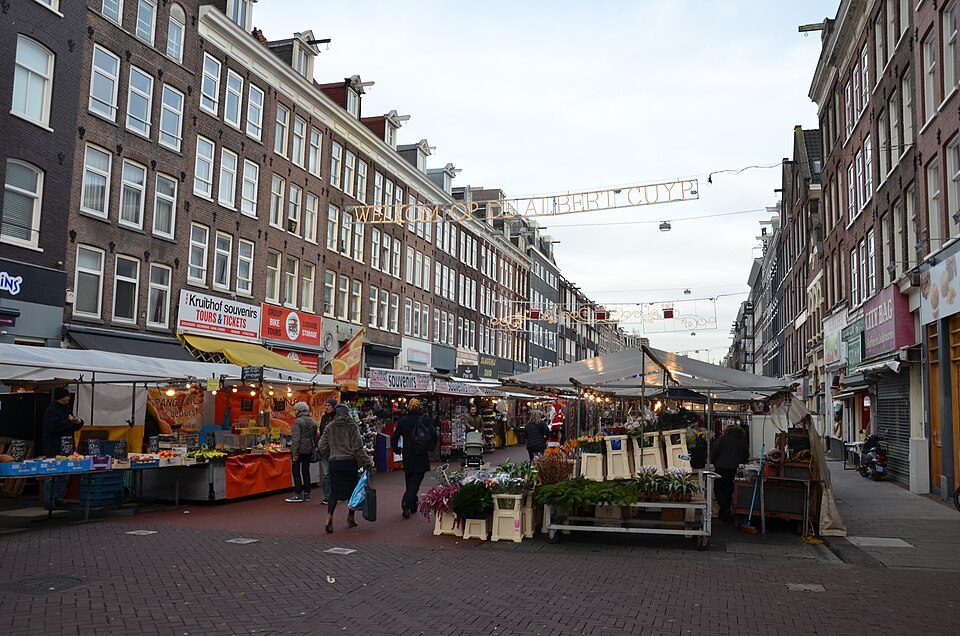
One of the area's most famous attractions is the Albert Cuyp Market, the largest and busiest street market in the Netherlands. Stretching for several blocks through the centre of the neighbourhood, the market attracts both residents and visitors with its mix of fresh produce, clothing, street food, flowers, household goods, and local specialties.
Sarphatipark provides an important green space within the densely built neighbourhood. The park serves as a gathering place for residents and offers walking paths, open lawns, playgrounds, and quiet areas away from the busy surrounding streets.
The Heineken Experience, located in the former Heineken brewery building, is one of Amsterdam's most visited attractions and offers insight into the history of one of the world's best-known beer brands.
On the western edge of De Pijp, visitors will also find easy access to Museumplein, home to several of Amsterdam's most important cultural institutions. While technically located outside De Pijp, its close proximity makes it a natural extension of the neighbourhood for many visitors.
Restaurants, Cafés and Nightlife
De Pijp is widely regarded as one of Amsterdam's leading food districts. The neighbourhood's multicultural population is reflected in its diverse restaurant scene, which includes Dutch, Indonesian, Middle Eastern, Italian, Japanese, Thai, Surinamese, and many other international cuisines.
The streets surrounding Albert Cuypstraat, Ferdinand Bolstraat, Gerard Doustraat, and Van Woustraat contain a large concentration of restaurants, cafés, bakeries, and specialty food establishments. Outdoor terraces are particularly popular during warmer months and contribute to the lively atmosphere of the neighbourhood.
Coffee culture is also deeply embedded in De Pijp. Independent coffee bars, brunch cafés, and lunchrooms can be found throughout the district, attracting both locals and visitors throughout the day.
For evening entertainment, De Pijp offers a more relaxed nightlife scene than Amsterdam's city center. Visitors will find numerous bars, cocktail lounges, wine bars, and traditional pubs spread throughout the neighbourhood. While large nightclubs are less common than around Leidseplein or Rembrandtplein, the area remains lively well into the evening, particularly on weekends.
Shopping, Markets and Leisure Activities
Shopping in De Pijp focuses primarily on independent retailers, local businesses, specialty stores, and boutique shops. While the neighbourhood contains some larger retail chains, it is best known for its smaller businesses and local character.
The Albert Cuyp Market remains the area's most important shopping destination. Open six days a week, it provides one of the best opportunities to experience everyday life in Amsterdam while sampling local foods and browsing hundreds of market stalls.
The neighbourhood also offers a variety of leisure activities, including fitness studios, yoga centres, wellness facilities, cinemas, and cultural venues. Several escape rooms and indoor activity venues are located within walking distance of the area's main streets.
Sarphatipark serves as the district's primary recreational space and is popular for walking, jogging, picnicking, and informal sports activities. The park provides a welcome contrast to the dense urban environment that surrounds it.
Character of the Area
De Pijp combines the energy of a busy urban district with the atmosphere of a residential neighbourhood. The area's multicultural population, independent businesses, vibrant food scene, and central location have made it one of Amsterdam's most desirable places to live and visit.
Unlike the historic city center, De Pijp offers fewer major tourist landmarks but provides a more contemporary view of Amsterdam life. Visitors come for the restaurants, cafés, market culture, and local atmosphere, while residents value the neighbourhood's walkability, amenities, and strong sense of community.
The result is a district that feels distinctly Amsterdam while maintaining its own identity, making De Pijp one of the city's most dynamic and enjoyable neighbourhoods to explore.



 Nederlands
  Français
  Deutsch
  Italiano
  Español
  Português