 Nederlands
  Français
  Deutsch
  Italiano
  Español
  Português

Most known churches in Amsterdam
The Old Church Amsterdam
The Old Church Amsterdam (Oude Kerk) is the oldest surviving building in the city. Founded in the early fourteenth century, it originally served Amsterdam's growing fishing community and gradually became the city's principal parish church.Today, the church is known for its impressive Gothic architecture, wooden vaulted ceiling, stained glass windows, and more than 2,500 gravestones built into the floor. Contemporary art exhibitions are regularly held inside the historic building, creating a unique combination of old and new.
As the oldest church in Amsterdam, the Oude Kerk remains one of the city's most important historical landmarks.
The New Church Amsterdam Netherlands
Despite its name, the New Church Amsterdam Netherlands (Nieuwe Kerk) dates back to the fifteenth century. It was built after the Oude Kerk could no longer accommodate Amsterdam's rapidly growing population.Located on Dam Square beside the Royal Palace, the church no longer functions as a parish church. Instead, it hosts major exhibitions, concerts, royal ceremonies, and national events. Dutch monarchs are inaugurated here, and several royal weddings have taken place inside the church.
Its late Gothic architecture and central location make it one of Amsterdam's most visited monuments.
Westerkerk Amsterdam Tower
The Westerkerk is one of Amsterdam's best-known churches and dominates the skyline with its famous Westerkerk Amsterdam tower, also called the Westertoren.Completed in 1638, the church is an outstanding example of Dutch Renaissance architecture. The tower rises approximately 85 metres above the city and can be climbed during guided tours, offering panoramic views across Amsterdam's canals and historic centre.
The Westerkerk is also closely connected to Rembrandt van Rijn, who was buried nearby, and to Anne Frank, whose diary mentions hearing the church bells from the Secret Annex.
Historic Protestant Churches in Amsterdam
Several of Amsterdam's most important church buildings were constructed after the Reformation, when Protestantism became the city's official religion. Alongside the Oude Kerk, Nieuwe Kerk, and Westerkerk, the Zuiderkerk and Oosterkerk provide valuable insight into the growth of Amsterdam during the seventeenth century.Zuiderkerk Amsterdam
The Zuiderkerk Amsterdam was the first church in the city built specifically for Protestant worship after the Reformation. Designed by the renowned architect Hendrick de Keyser, it was completed in the early seventeenth century as Amsterdam expanded beyond its medieval centre.The church is especially recognisable by its elegant tower and distinctive spire, which remain prominent features of the historic city skyline. Although the Zuiderkerk no longer serves as a regular parish church, the building remains an important monument to Amsterdam's religious and architectural history.
Oosterkerk Amsterdam
The Oosterkerk Amsterdam was built during the seventeenth century to serve the growing population of Amsterdam's eastern harbour district. Its balanced design, large windows, and central interior reflect the practical and relatively restrained style associated with Dutch Protestant church architecture.Located close to the former shipyards and warehouses of the eastern docklands, the Oosterkerk was closely connected to the sailors, shipbuilders, and working families who lived in the neighbourhood. Today, the historic building remains an important cultural and architectural landmark.
Vondelkerk Amsterdam
The Vondelkerk Amsterdam is a striking Neo-Gothic church beside Vondelpark. Designed by Pierre Cuypers, the architect also responsible for the Rijksmuseum and Amsterdam Central Station, the church was built during the nineteenth century and is distinguished by its pointed arches, decorative brickwork, and slender tower.Originally constructed as a Roman Catholic church, the Vondelkerk later lost its religious function. The restored building is now used for offices, meetings, weddings, and other events while retaining its historic architectural character.
Church of Saint Nicholas Amsterdam
The Church of Saint Nicholas Amsterdam, officially the Basilica of Saint Nicholas, is the city's principal Roman Catholic church.Built between 1884 and 1887, the basilica combines Neo-Baroque and Neo-Renaissance architecture. Its impressive dome, richly decorated interior, mosaics, marble columns, and stained-glass windows make it one of Amsterdam's finest churches.
Located opposite Amsterdam Central Station, it remains an active parish while welcoming thousands of visitors every year.
Roman Catholic Churches in Amsterdam
Several important Roman Catholic churches in Amsterdam illustrate the revival of Catholicism after centuries of restrictions on public worship. Following the restoration of religious freedom during the nineteenth century, many impressive Catholic churches were built throughout the city.Basilica of Saint Nicholas
The Basilica of Saint Nicholas is the largest Roman Catholic church in Amsterdam and serves as the city's cathedral church. Its richly decorated interior and central location make it one of the most visited churches in the capital.De Krijtberg
De Krijtberg, officially dedicated to Saint Francis Xavier, is one of Amsterdam's finest Neo-Gothic churches. Its elaborate interior, soaring columns, stained-glass windows, painted ceilings, and richly decorated chapels make it one of the city's architectural highlights.Dominicuskerk Amsterdam
The Dominicuskerk Amsterdam is a large nineteenth-century church on Spuistraat with roots in Amsterdam's Roman Catholic Dominican community. Designed by Pierre Cuypers, the building combines Neo-Gothic features with a spacious and light-filled interior.The Dominicuskerk is known for its tall arches, stained-glass windows, religious artwork, and strong musical tradition. It continues to serve as a place for worship, reflection, concerts, and community gatherings in the centre of Amsterdam.
Our Lady Church Amsterdam
The Our Lady Church Amsterdam (Onze Lieve Vrouwekerk) serves an active Roman Catholic congregation. Built during the nineteenth century, it reflects the renewed freedom Catholics gained after restrictions on public worship were lifted.Hidden Churches in Amsterdam
One of Amsterdam's most fascinating historical features is its collection of hidden churches, known in Dutch as schuilkerken.Following the Alteration of Amsterdam in 1578, the city officially became Protestant. Public Catholic worship was prohibited, although Catholics were generally allowed to continue practising their religion privately. Instead of forcing Catholics to leave the city altogether, Amsterdam developed a relatively tolerant approach. As long as religious gatherings remained hidden from public view, authorities often chose not to interfere.
Rather than constructing visible church buildings, wealthy merchants converted the upper floors and attics of ordinary canal houses into fully functioning churches. From the street these buildings appeared to be normal homes or warehouses, but inside they contained complete sanctuaries with altars, organs, pews, confessionals, paintings, and seating for hundreds of worshippers.
These hidden churches became an important part of Amsterdam's history and demonstrate how religious communities adapted during a period of changing political and religious power. Several of these remarkable churches have survived and remain open to visitors today.
The Church in the Attic Amsterdam
The best-known hidden church is The Church in the Attic Amsterdam, officially called Ons' Lieve Heer op Solder.Hidden inside a seventeenth-century canal house, visitors first explore the merchant family's living quarters before reaching a fully preserved Catholic church occupying the top three floors. The church still contains its original altar, paintings, pews, confessionals, and pipe organ, making it one of Europe's finest surviving hidden churches.
Today it functions as a museum, allowing visitors to experience how Catholics secretly worshipped during the Dutch Golden Age.
De Papegaai
Another important hidden church is De Papegaai, officially the Church of Saints Peter and Paul.Its congregation originally worshipped in a concealed chapel before later constructing the present church after greater religious freedom returned to Amsterdam. Although the current church is visible from Kalverstraat, its origins lie in Amsterdam's tradition of hidden churches.
The Begijnhof and the English Church Amsterdam
The Begijnhof is one of Amsterdam's oldest and most peaceful courtyards. Hidden behind an entrance near Spui Square, it dates back to the fourteenth century and offers a quiet contrast to the busy city centre.The Begijnhof was home to the Beguines, religious women who chose to live together in a spiritual community without becoming nuns. They devoted themselves to prayer, education, and caring for the sick while remaining financially independent and free to leave the community if they wished. This unique way of life continued in Amsterdam for centuries.
The courtyard still contains beautifully preserved historic houses, gardens, and two churches that reflect Amsterdam's changing religious landscape. Walking through the Begijnhof offers a glimpse into a quieter side of the city that has remained largely unchanged for generations.
English Church Amsterdam
The English Church Amsterdam, officially the English Reformed Church, occupies the original medieval chapel of the Begijnhof.After the Reformation, the building became home to Amsterdam's English-speaking Protestant congregation. For centuries it has served merchants, diplomats, students, expatriates, and international visitors. Regular worship services continue to be held in English today.
Begijnhof Chapel
Hidden within one of the courtyard houses is the Begijnhof Chapel, another example of Amsterdam's secret Catholic churches.After Catholics lost access to the original chapel, the Beguines established a concealed place of worship inside their residential buildings, allowing Mass to continue in private. Although much smaller than Ons' Lieve Heer op Solder, it provides another remarkable example of Amsterdam's hidden church tradition.
Mennonite Church Amsterdam
The Mennonite Church Amsterdam reflects the long history of the Mennonite community in the Netherlands. Mennonites settled in Amsterdam during the sixteenth century and became known for their commitment to peace, education, and commerce.One of the best-known Mennonite churches is the Doopsgezinde Singelkerk. Unlike many grand churches of the period, Mennonite churches were intentionally modest. Their simple interiors reflect the denomination's emphasis on humility, equality, and community life.
Amsterdam Church of Christ
The Amsterdam Church of Christ forms part of the international Churches of Christ fellowship. The congregation offers English-language worship services, Bible studies, and community activities for both Dutch residents and international members living in Amsterdam.Amsterdam Orthodox Church
Several Orthodox Christian communities are active throughout Amsterdam, representing Greek, Russian, Romanian, Serbian, and other Eastern Orthodox traditions.One of the best-known examples is the Orthodox Parish of Saint Nicholas of Myra, where visitors can experience traditional Byzantine liturgy, iconography, incense, and centuries-old worship practices.
Synagogue Amsterdam
Although synagogues are not churches, they form an essential part of Amsterdam's religious and cultural heritage. Amsterdam has one of the oldest and most influential Jewish communities in Western Europe.Jewish merchants began settling in Amsterdam during the sixteenth century, followed by Sephardic Jews who fled persecution in Spain and Portugal. Later, Ashkenazi Jews from Central and Eastern Europe established thriving communities throughout the city. During the Dutch Golden Age, Amsterdam became an important centre of Jewish scholarship, commerce, printing, and religious life.
Despite the devastation of the Holocaust, many important Jewish landmarks have been preserved. Today, visitors can explore synagogues, museums, memorials, and historic neighbourhoods that tell the story of Jewish life in Amsterdam across more than four centuries.
Portuguese Synagogue Amsterdam
The Portuguese Synagogue Amsterdam, also known as the Esnoga, was completed in 1675 and remains one of the world's best-preserved Sephardic synagogues. At the time of its construction, it was one of the largest synagogues in the world and symbolised the religious freedom many Sephardic Jews found after escaping persecution on the Iberian Peninsula.The synagogue is famous for its enormous wooden interior, high vaulted ceilings, original furnishings, and the hundreds of candles that still illuminate the building during special ceremonies. Unlike many historic religious buildings, much of the synagogue remains exactly as it was centuries ago.
Today it forms part of the Jewish Cultural Quarter and is one of Amsterdam's most significant historic monuments.
The Jewish Cultural Quarter
Many of Amsterdam's most important Jewish landmarks are located within the Jewish Cultural Quarter, sometimes referred to by visitors as the Jewish Corner of Amsterdam. Situated around Waterlooplein and the Plantage neighbourhood, this area preserves the history of Amsterdam's Jewish community in one compact district.Visitors can walk between the Portuguese Synagogue, the Jewish Museum, the National Holocaust Museum, the Hollandsche Schouwburg Memorial, and the National Holocaust Names Monument. Together, these sites tell the story of Jewish life before, during, and after the Second World War.
The neighbourhood provides one of the most meaningful historical walks in Amsterdam and offers insight into both the achievements and tragedies of the city's Jewish community.
Amsterdam Modern Orthodox Synagogue
The Amsterdam Modern Orthodox Synagogue serves part of Amsterdam's active Orthodox Jewish community. Daily prayers, Sabbath services, and Jewish holidays continue to be observed according to Orthodox Jewish traditions.It should not be confused with the city's Orthodox Christian churches. While both use the word "Orthodox," they belong to different religions. Orthodox synagogues follow Jewish law and traditions, while Orthodox churches are part of Eastern Christianity.
Alongside Orthodox congregations, Amsterdam is also home to Liberal Jewish communities, reflecting the diversity of Jewish religious life that continues to exist today.
Buddhist Temple Amsterdam
Amsterdam is also home to several Buddhist communities representing Zen, Tibetan Buddhism, and Theravada traditions.The Fo Guang Shan He Hua Temple is the largest Buddhist temple in Europe built in traditional Chinese palace style. Located in Amsterdam's Chinatown, the temple welcomes both worshippers and visitors interested in Buddhist culture, architecture, and meditation.
Discover the Churches in Amsterdam
From the medieval Old Church Amsterdam and the ceremonial New Church Amsterdam Netherlands to the impressive Westerkerk Amsterdam tower, Zuiderkerk, Oosterkerk, and Vondelkerk, Amsterdam offers an extraordinary variety of religious landmarks.Visitors can explore Roman Catholic churches such as the Dominicuskerk, discover the remarkable history of hidden churches, walk through the peaceful Begijnhof, visit Orthodox churches, learn about Amsterdam's Jewish heritage in the Jewish Cultural Quarter and the Portuguese Synagogue, or experience Buddhist traditions at the He Hua Temple.
Together, these places of worship tell the story of Amsterdam's religious diversity and make the city's churches and religious landmarks some of its most rewarding historic attractions.
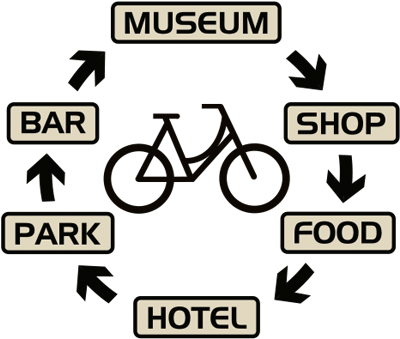
Use a bike your entire stay