 Nederlands
  Français
  Deutsch
  Italiano
  Español
  Português

Historical Context
The southern city centre largely took shape during Amsterdam’s enormous expansion in the 17th century. As trade, wealth and population increased, the medieval city became too small. Amsterdam responded by expanding outward and creating the famous Canal Belt that still defines much of the city today.The Herengracht, Keizersgracht and Prinsengracht were extended southwards as part of this expansion. Wealthy merchants and other members of Amsterdam’s upper classes built large canal houses here, while smaller streets between the canals filled with shops, workshops and businesses.
Some of the most impressive stretches of the Canal Belt can still be found in this part of Amsterdam. Large canal houses, decorative façades and former merchant residences give the southern canals a noticeably grand character.
Leidseplein developed near one of the historic entrances to Amsterdam. The road leading away from this part of the city continued towards Leiden, which is also where names such as Leidseplein and Leidsestraat come from.
As Amsterdam expanded further during the 19th century, the area south of the canals changed again. New neighbourhoods and cultural institutions developed around what is now Museumplein, while the nearby Spiegelkwartier became closely associated with art, antiques and galleries.
Today, this mixture of different periods is still easy to see. The historic Canal Belt forms the backbone of the area, while theatres, shopping streets, nightlife and cultural venues have gradually grown around it.
Areas and Character
One of the most interesting things about Amsterdam City Centre South is how quickly the atmosphere changes between its different areas.Spui and the Southern Canal Belt
Spui sits between Amsterdam’s historic centre, major shopping streets and the southern Canal Belt. The square itself is relatively small, with bookshops, cafés, historic buildings and university buildings giving it a more relaxed atmosphere than the larger entertainment squares nearby.From Spui, the canals of the southern centre are only a few minutes away. The southern sections of the Herengracht and Keizersgracht are lined with some of Amsterdam’s most impressive canal houses, while smaller waterways such as the Reguliersgracht provide classic canal views. Several crossings in this part of the city are featured among the most beautiful bridges in Amsterdam.
Leidseplein and Leidsebuurt
Around Leidseplein and the Leidsebuurt, the city feels much more energetic. Trams, cyclists and pedestrians cross paths throughout the day, while theatres, music venues, restaurants and bars keep the area lively well into the evening.Leidsestraat connects Leidseplein directly with the Canal Belt and the central shopping streets, making this one of the busiest parts of City Centre South.
Spiegelkwartier and Vijzelgracht
The atmosphere changes again around the Spiegelkwartier. Nieuwe Spiegelstraat and Spiegelgracht are known for their art galleries, antique shops and specialist stores. Historic canal houses and views towards the Rijksmuseum give this part of the city a quieter and more refined character.Further east, Vijzelgracht and Vijzelstraat form an important route through the southern centre. These wider streets connect the Canal Belt with neighbourhoods farther south, while narrow canals and quieter residential streets can still be found only a few minutes away.
Museumplein and Vondelpark
Immediately south of the historic centre, Museumplein forms Amsterdam’s main museum district. The large open square and surrounding cultural institutions give this area a very different feel from the compact streets and canals farther north.Just west of Museumplein lies Vondelpark, where the dense city opens into one of Amsterdam’s largest and most popular green spaces.
Because City Centre South sits between the historic centre, Museumplein, Vondelpark and neighbourhoods such as De Pijp, it is also a convenient part of Amsterdam to explore by bicycle.
Things to See, Eat and Do
The different parts of Amsterdam City Centre South each combine sightseeing, shopping, food and entertainment in their own way. Exploring the area geographically therefore makes more sense than treating attractions, restaurants and shops as completely separate categories.Spui and the Southern Canal Belt
Spui is an interesting stop for visitors interested in books, cafés and historic Amsterdam. The nearby Begijnhof provides a much quieter glimpse of old Amsterdam, hidden just behind some of the busiest shopping streets in the city.A short walk from Spui brings you to the Flower Market along the Singel. This famous floating market is associated with flowers, bulbs and Dutch souvenirs, and its central location makes it easy to combine with the surrounding canals, Kalverstraat and other central shopping streets.
The southern Canal Belt also contains several cultural attractions. The FOAM Photography Museum, located on the Keizersgracht, presents exhibitions ranging from work by established international photographers to newer and experimental photography.
Nearby, Museum Van Loon offers a look inside one of Amsterdam’s historic canal houses. Its rooms, furnishings and garden provide an impression of how wealthy Amsterdam families once lived along the Canal Belt.
Cafés and restaurants are spread throughout the area, particularly around Spui, the shopping streets and the canals. This makes it easy to combine sightseeing with lunch, coffee or a drink without leaving the historic centre.
Leidseplein and Leidsebuurt
Leidseplein is the main entertainment hub in this part of Amsterdam. The square itself is surrounded by restaurants, terraces and nightlife, while several of the city’s best-known cultural venues can be found nearby.These include Internationaal Theater Amsterdam, the DeLaMar Theater, Melkweg and Paradiso. Together, they make the Leidsebuurt one of Amsterdam’s most important areas for theatre, live music and evening entertainment.
The area also fits naturally into Amsterdam’s wider scene for comedy, shows and cabaret, with plenty happening beyond the major concert venues.
Leidsestraat runs from the Canal Belt towards Leidseplein and is one of Amsterdam’s busiest shopping routes, with a mix of fashion chains, footwear stores and international brands.
Restaurants, cafés and bars are densely concentrated around Leidseplein and the surrounding streets. It is one of the easiest areas to find somewhere for dinner before a theatre performance, concert or night out.
The busiest streets can be quite tourist-oriented, but the wider Leidsebuurt also contains plenty of smaller restaurants and cafés. Leidseplein is also one of several important areas within Amsterdam’s nightlife, club and party scene.
Spiegelkwartier and Vijzelgracht
The Spiegelkwartier offers a very different experience. Nieuwe Spiegelstraat and the surrounding streets specialise in antiques, art, jewellery, ceramics and unusual collectible objects. Even if you are not planning to buy anything, browsing the galleries and shop windows can be part of exploring the neighbourhood.The area almost feels like an extension of the nearby museum district, with the Rijksmuseum visible at the end of Spiegelgracht.
A little farther east, Pathé Tuschinski on Reguliersbreestraat is one of Amsterdam’s most distinctive cinemas. Opened in the early 20th century, the building is known for its elaborate interior and makes watching a film here a very different experience from visiting a modern multiplex.
It is one of several notable venues featured among the best cinemas in Amsterdam.
On Vijzelstraat, the monumental De Bazel building houses the Amsterdam City Archives. Even if you are not researching the city’s history, the building itself and its exhibitions can make it an interesting stop.
Restaurants and cafés around the Spiegelkwartier and southern Canal Belt tend to be more spread out than around Leidseplein. The canals and quieter side streets make this part of the area particularly pleasant for lunch, coffee or a drink after visiting a museum or gallery.
Around Vijzelgracht there are also plenty of places to eat and drink, with even more options appearing as you continue south towards De Pijp.
Museumplein and Vondelpark
Museumplein is Amsterdam’s main museum district and one of the most important cultural areas in the city. The large open square is surrounded by several major institutions and provides plenty of space to sit, walk or take a break between museums.The best-known attraction is the Rijksmuseum, where Dutch art and history are brought together in one of the country’s most important museum collections. Its displays cover centuries of Dutch history and include works by Rembrandt, Vermeer and many other major artists, making it one of the highlights among Amsterdam’s history museums.
Museumplein is also home to the Van Gogh Museum, with the world’s largest collection of works by Vincent van Gogh, and the Stedelijk Museum, which focuses on modern and contemporary art and design.
Together, these museums make Museumplein one of the easiest places in Amsterdam to spend several hours exploring very different periods and styles of art. The area forms the heart of Amsterdam’s wider museum scene.
Shopping here also has a different character. P.C. Hooftstraat, just beside Museumplein and close to Vondelpark, is Amsterdam’s best-known luxury shopping street, with designer fashion houses, premium brands, jewellery stores and upscale boutiques.
Together with Leidsestraat, the Spiegelkwartier and the central shopping streets around Spui, it helps make City Centre South one of the most varied areas for shopping in Amsterdam.
Just west of Museumplein lies Vondelpark, one of Amsterdam’s most popular green spaces. It provides an easy contrast to the museums and shopping streets and can be reached within minutes by bicycle from either Museumplein or Leidseplein.
The park also connects naturally with routes through Amsterdam’s parks by bicycle.
For visitors who prefer doing rather than sightseeing, this side of the centre is also well placed for many active things to do in Amsterdam, with Vondelpark, the canals and neighbourhoods south of the centre all close by.
Exploring Amsterdam City Centre South
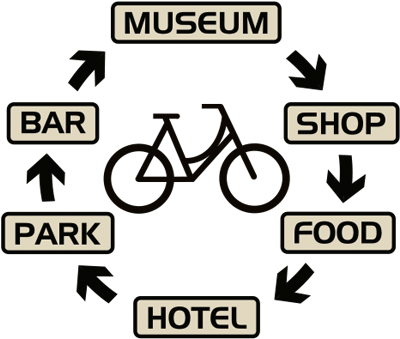
One of the biggest strengths of Amsterdam City Centre South is how much variety can be found within a relatively compact area. Visitors can move from bookshops and historic courtyards around Spui to the busy entertainment streets around Leidseplein, the galleries of the Spiegelkwartier and the major museums around Museumplein.Walking works well within the individual areas, but a bicycle makes it considerably easier to move between the southern Canal Belt, Leidseplein, Museumplein, Vondelpark and neighbourhoods farther south.
The area also connects naturally with several other parts of Amsterdam. Continue south from Vijzelgracht and the streets gradually change into De Pijp, known for the Albert Cuyp Market, restaurants, cafés and its more residential atmosphere.
Head east through the centre and you eventually reach Amsterdam Centrum Oost, with Waterlooplein, the Plantage and several important museums and cultural attractions.
Travel northwest through the Canal Belt and the streets lead towards the Nine Streets and the Jordaan.
This central position makes City Centre South particularly useful for visitors who want to combine several sides of Amsterdam in the same day, from canals, shopping and nightlife to museums, parks and quieter neighbourhood streets.
Use a bike your entire stay