 Nederlands
  Français
  Deutsch
  Italiano
  Español
  Português

Why Amsterdam is easy to navigate
Amsterdam developed long before cars became common. Streets were designed around walking, cycling and boats moving through the canals. That historic layout still shapes how the city works today.Many major attractions sit within a relatively small area. Museums, restaurants, shops and canals are often only minutes apart, while narrow streets and bridges naturally encourage walking and cycling.
Public transport complements this structure. Trams move through the city centre, metro lines connect areas further out, buses reach neighbourhoods without direct rail connections, and ferries cross the IJ to Amsterdam Noord. Together, walking, cycling and public transport make Amsterdam relatively easy to navigate, even for first-time visitors.
If you are still deciding what to see during your visit, our guide to things to do in Amsterdam gives you an overview of attractions, museums, parks, markets and other activities across the city.
Walking through the city centre
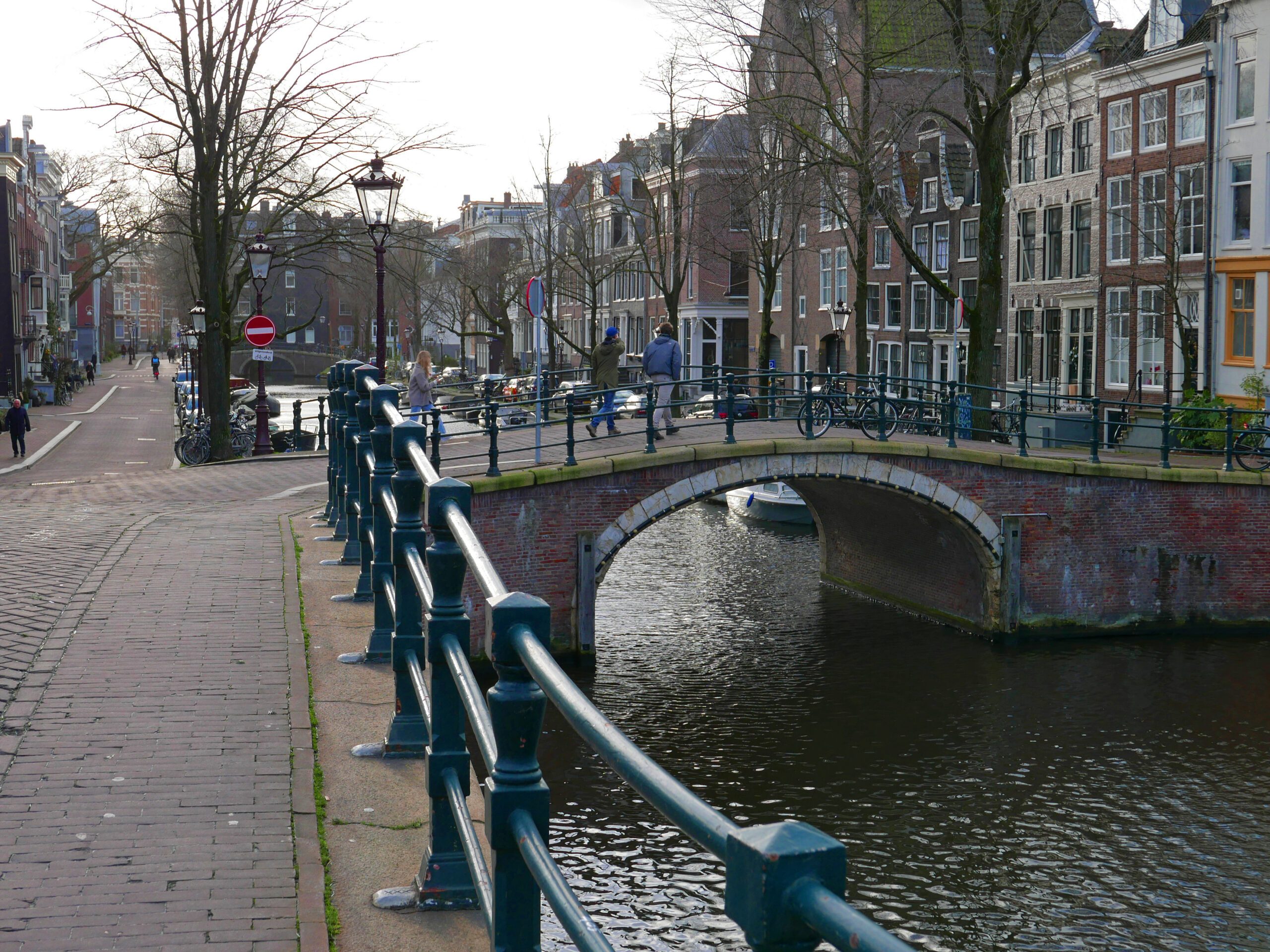
A short walk can take you across several bridges, past historic canal houses and through neighbourhood streets filled with cafés, shops and restaurants. What looks far on a map often turns out to be a comfortable twenty-minute walk.
Walking works especially well around the Canal Ring, Jordaan and historic city centre. Areas such as De Pijp, Museumplein and nearby neighbourhoods can also easily be explored on foot once you are there.
Amsterdam changes noticeably from one district to another. If you want to understand how the different parts of the city connect, our guide to the neighbourhoods of Amsterdam explains the main areas and what you can find in each one.
Because you do not depend on schedules or transport stops, walking also gives you more freedom to explore smaller streets and unexpected places along the way.
Cycling through Amsterdam like locals
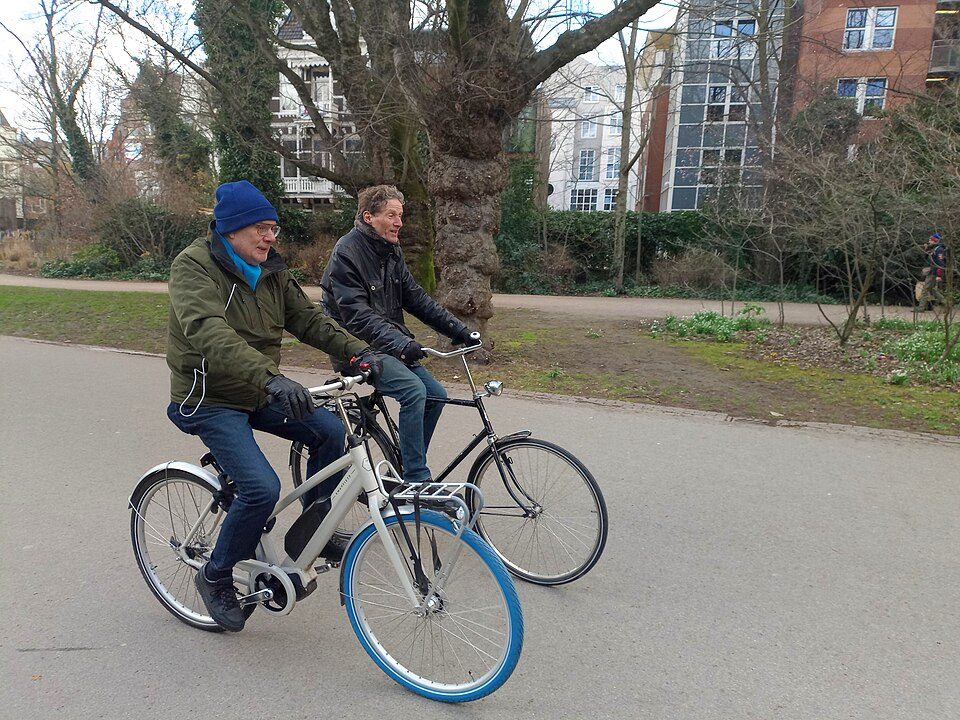
Amsterdam is flat and has an extensive network of dedicated cycle lanes. A relatively short bike ride can take you from the Canal Ring to Museumplein, from the Jordaan to Amsterdam Oost, or from the city centre towards parks and quieter neighbourhoods.
If you are new to cycling in the city, it is worth understanding the traffic rules and local cycling habits before setting off. Our guide to biking in Amsterdam explains the most important rules, practical tips and route ideas for visitors.
Visitors who want to explore by bicycle can learn how renting a bike in Amsterdam works before choosing a bike. You can also arrange your rental directly through Black Bikes, with locations across the city.
Once you stop somewhere, remember that bicycles cannot simply be left anywhere. Amsterdam has designated racks, parking areas and large bicycle garages, so it is useful to know how bike parking in Amsterdam works as well.
For first-time riders, Amsterdam traffic can initially look busy. The system becomes much easier once you understand the bike lanes, traffic lights and general flow of cyclists around you.
Cycle Like a Local
Public transport in Amsterdam
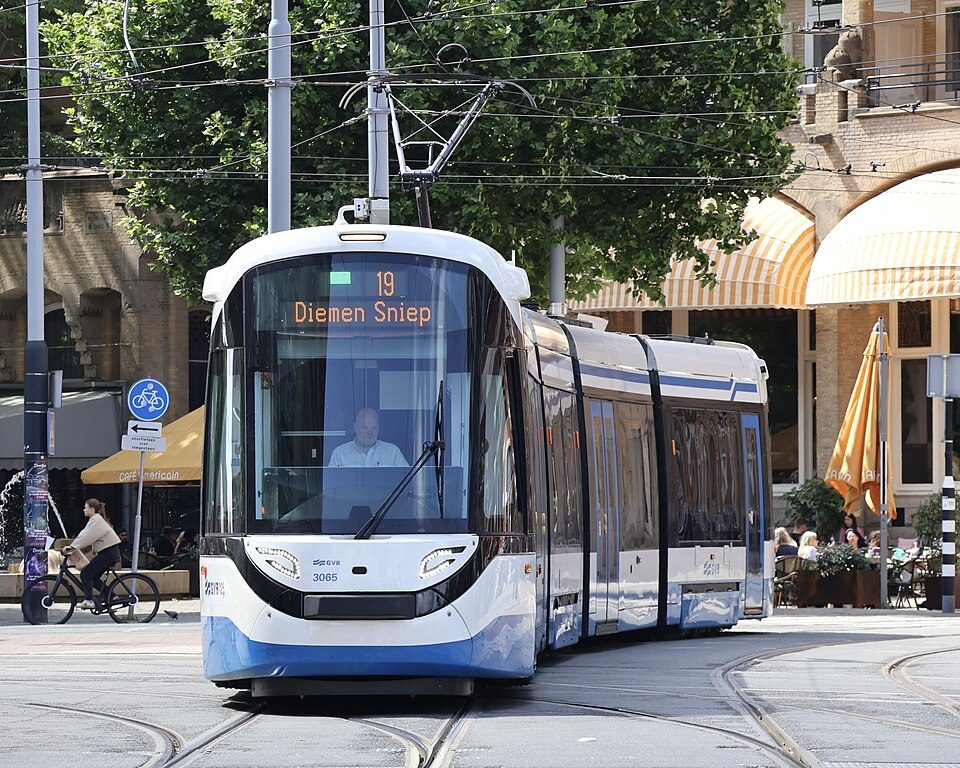
Trams are one of the most useful forms of public transport for visitors because many routes pass directly through or around the central parts of Amsterdam. They are particularly convenient for journeys between the city centre, Museumplein, De Pijp and other popular areas. Our guide to using the tram in Amsterdam explains the main routes, tickets, boarding and practical tips.
The metro is generally more useful for longer journeys and reaching areas further from the historic centre. Our guide to using the Amsterdam metro explains the main lines, tickets and practical details.
Buses fill in parts of the network that are not directly served by trams or metro. They are particularly useful for certain outer neighbourhoods and journeys beyond the central area. You can read more about tickets, fares and boarding in our guide to taking the bus in Amsterdam.
On GVB trams, metros and buses, travellers can generally check in and out using a contactless debit or credit card. There are also several travel passes available depending on how long you are staying and how often you expect to use public transport. Our Amsterdam public transport ticket guide compares the main options.
If you are staying for several days and expect to use public transport frequently, you may also want to read how the Amsterdam 3-day GVB ticket works. It gives you unlimited travel on regular GVB trams, metros and buses for 72 consecutive hours.
For current routes, departure times and service information, you can also check the official GVB website.
The free ferries across the IJ
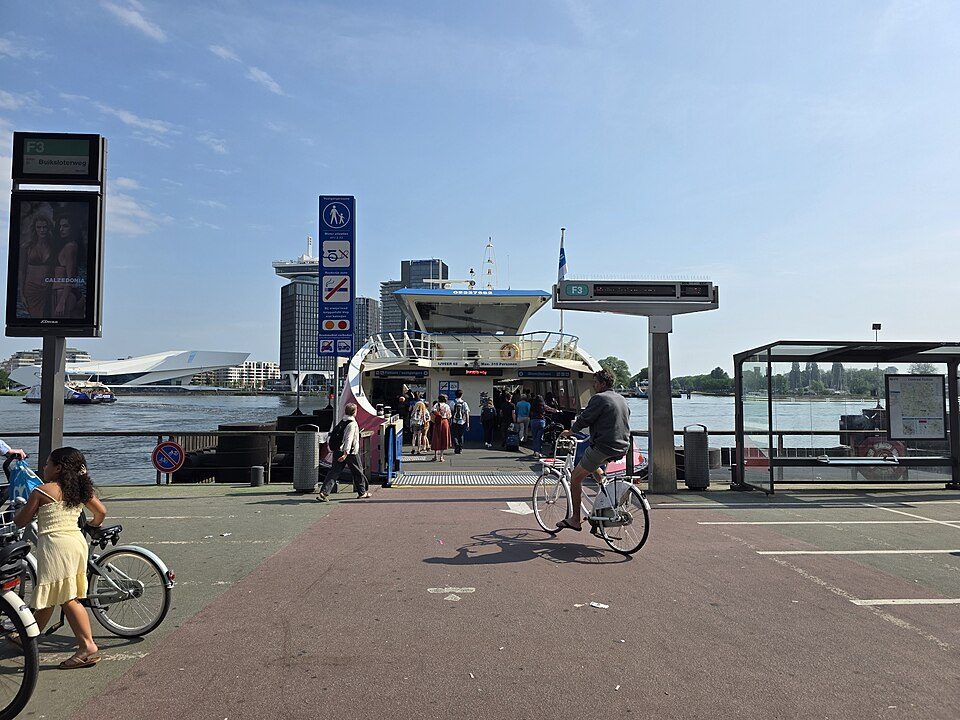
The ferries carry pedestrians and cyclists and are free to use. You simply walk or cycle aboard without checking in.
The crossing takes only a few minutes on the shortest routes and gives you open views across the IJ and Amsterdam's waterfront. For visitors exploring Noord, the ferry is usually the easiest connection from the city centre.
Our guide to the ferries in Amsterdam explains the main routes, schedules, taking a bike aboard and which ferry to choose when visiting Amsterdam Noord.
Ride the Ferry
Taxis, Uber and cars in Amsterdam
Taxis and ride-hailing services are available throughout Amsterdam, but they are usually more useful for specific situations than for everyday sightseeing.Traditional taxis can be useful when travelling with luggage, arriving late at night or taking a direct journey that is awkward by public transport. If you are considering one, our guide to taxis in Amsterdam explains how official taxis work, what to expect from prices and practical things to know before getting in.
Uber is another option and works throughout Amsterdam. Our guide to Uber in Amsterdam explains how the app works, typical situations where it can be useful and practical information about Schiphol Airport pick-up.
If you are arriving at or departing from the airport, our guide to travelling between Schiphol Airport and Amsterdam compares the train, bus, taxi and Uber and explains which option is most convenient for different parts of the city.
For short journeys through central Amsterdam, however, walking, cycling or public transport is often more convenient.
Cars are generally less practical for exploring central Amsterdam. Parking is expensive and limited, while many streets are narrow or designed to prioritise pedestrians, bicycles and public transport.
A car becomes more useful when travelling outside Amsterdam, but within the city most visitors will find walking, cycling or public transport easier.
Choosing the right way to travel in Amsterdam
There is no single best way to get around Amsterdam. The easiest approach is usually to combine several types of transport depending on where you are going.For short distances in the centre: walking is usually easiest.
For travelling between neighbourhoods: cycling is often the fastest and most flexible option.
For central public transport journeys: trams are especially useful and stop close to many major sights and neighbourhoods.
For longer journeys: metros and buses can be faster and more convenient, particularly when travelling further from the historic centre.
For Amsterdam Noord: take one of the free ferries across the IJ. You can also bring a bicycle aboard.
For luggage, Schiphol or late-night journeys: taxis and Uber can be useful alternatives.
For several days of frequent public transport: compare individual contactless journeys with an unlimited GVB ticket such as the 72-hour pass.
Once you understand these options, Amsterdam becomes a very straightforward city to explore. Choose a few places from our guide to things to do in Amsterdam, see how they are distributed across the city's different neighbourhoods, and then choose the easiest combination of walking, cycling and public transport to get between them.
Use a bike your entire stay