
 Nederlands
 Français
 Deutsch
 Italiano
 Español
 Português

The oldest building in Amsterdam
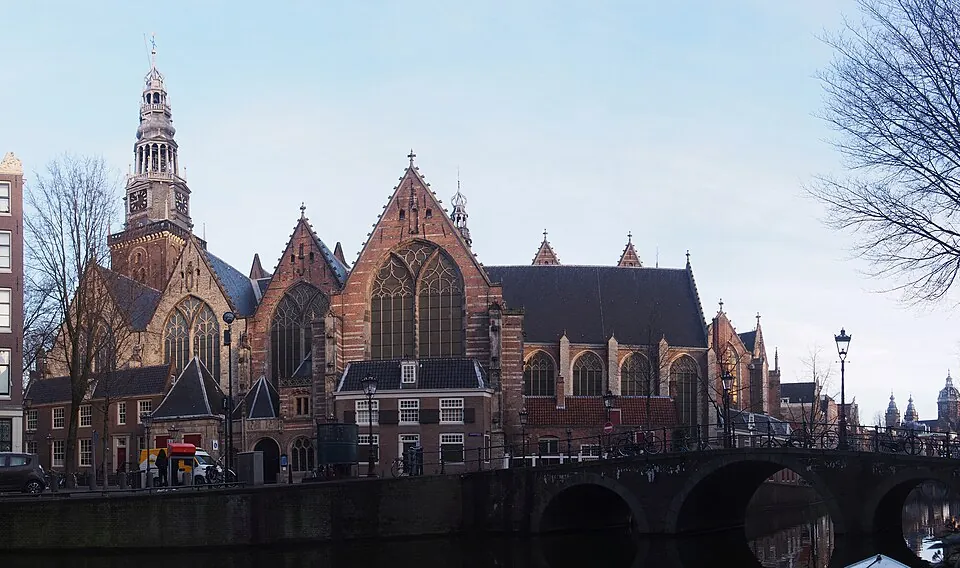
The building combines different periods of architecture. Its present form is largely Gothic, with high windows, stone columns and a large wooden roof. Around it, narrow streets and closely packed houses preserve the street pattern of medieval Amsterdam.
The Oude Kerk is therefore a useful starting point for understanding how Amsterdam developed from a small settlement into a major European city. You can discover more religious architecture in our guide to churches in Amsterdam.
The church is also located directly beside Black Bikes Red Light District, making it a convenient starting point for exploring the historic centre by bike.
Stadhuis Amsterdam and the Royal Palace
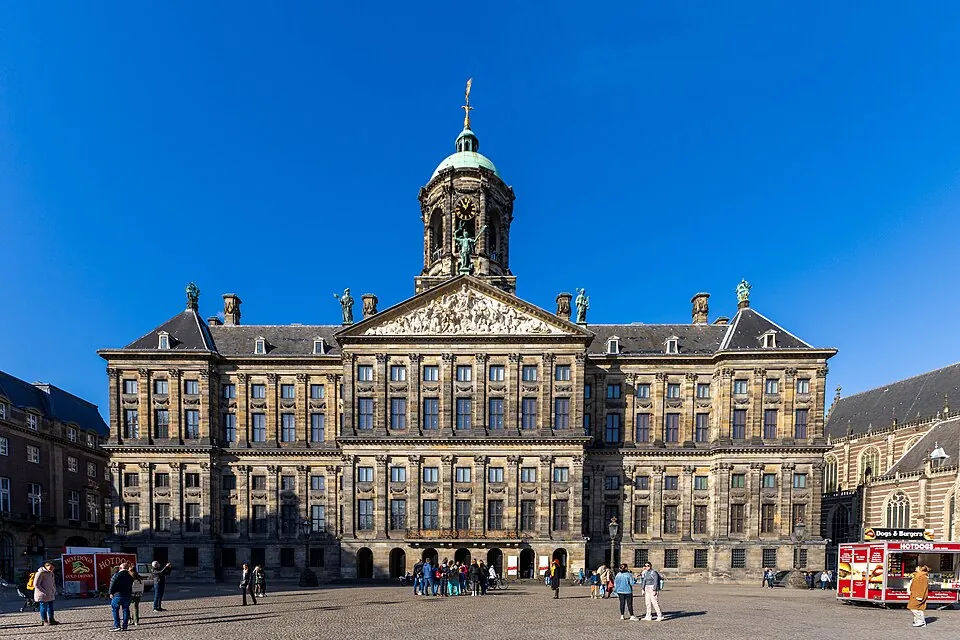
Construction began in 1648, when Amsterdam needed a larger town hall. Architect Jacob van Campen designed the building in the Dutch Classicist style. It opened as the Stadhuis Amsterdam in 1655 and reflected the wealth and political importance of the city during the 17th century.
Its function changed in the early 19th century. Louis Bonaparte, who became King of Holland in 1806, turned the former town hall into a royal palace in 1808. The building remains a royal palace today.
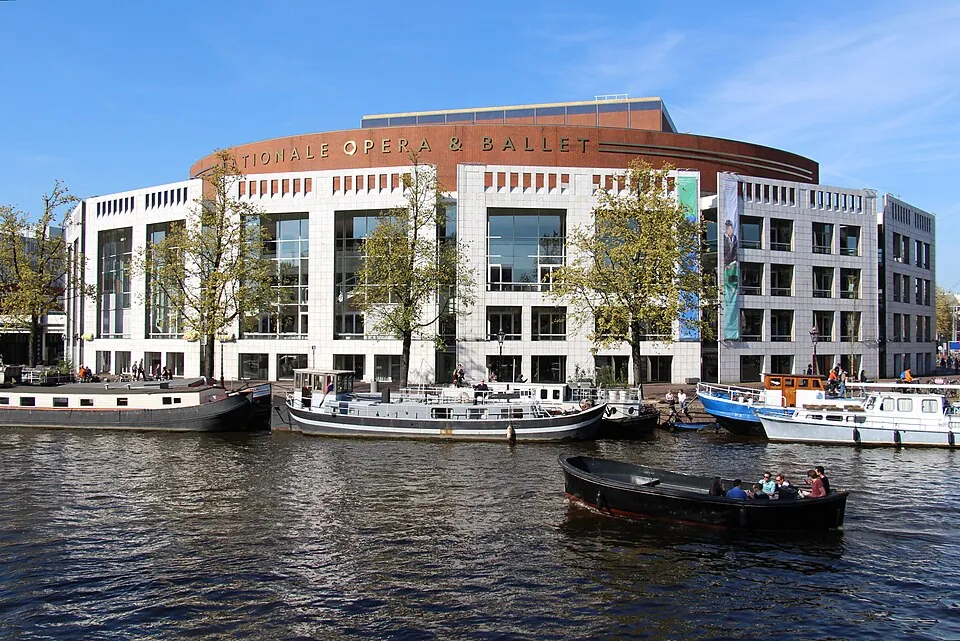
Amsterdam's current city hall is part of the Stopera complex on Waterlooplein. This modern building combines the city hall and Dutch National Opera & Ballet.
Munttoren Amsterdam
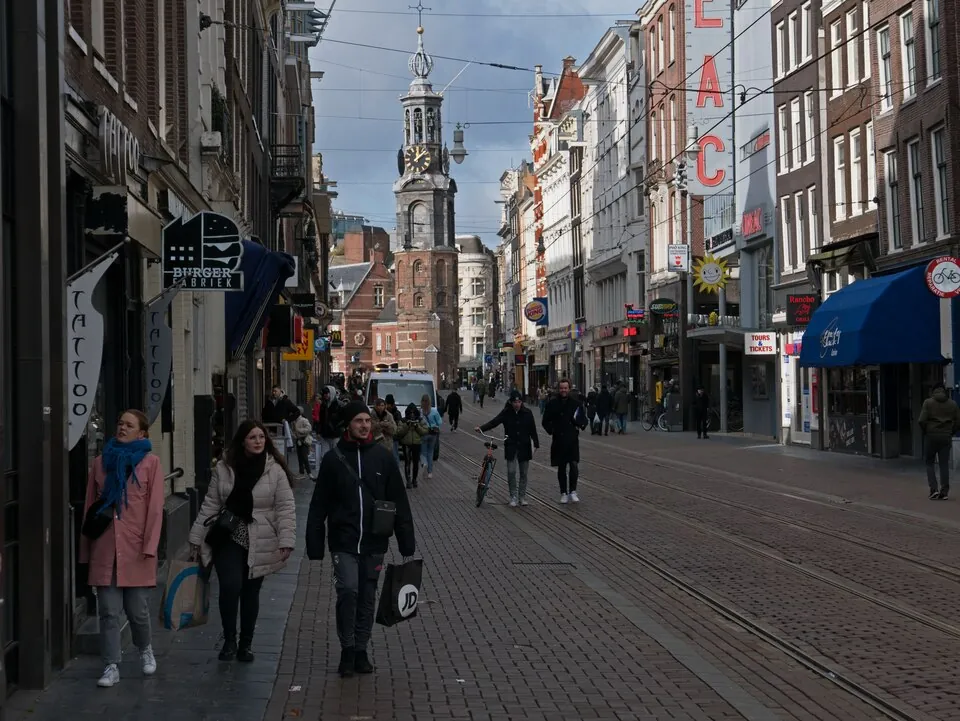
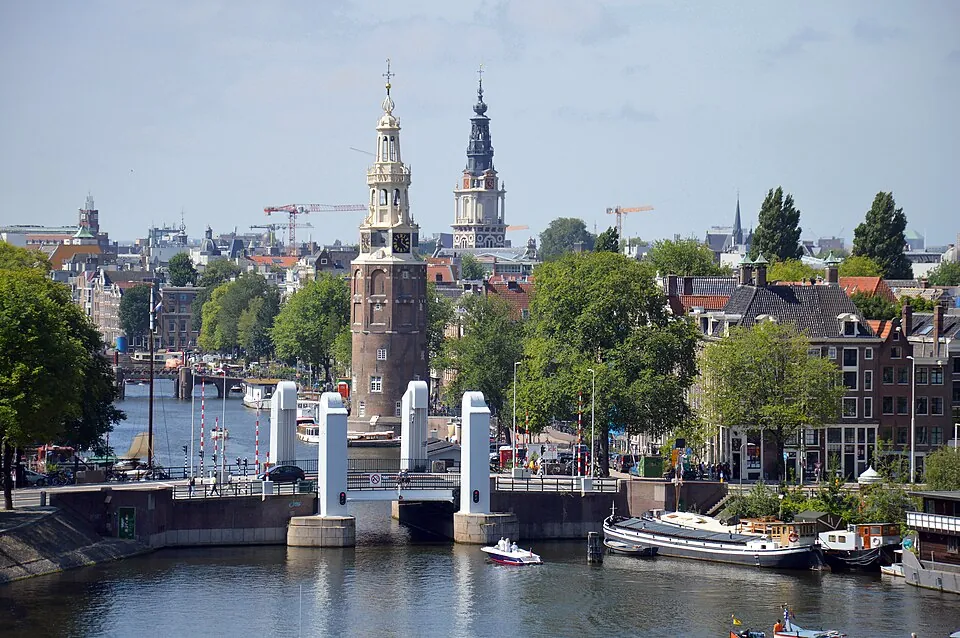
Most of the gate was destroyed by fire in 1618. One tower survived and was rebuilt with a new upper section designed by Hendrick de Keyser.
The name Munttoren comes from a later chapter in its history. Coins were temporarily minted here in the 17th century. "Munt" refers to minting coins in Dutch.
Today, the tower is surrounded by busy streets, shops, trams and the nearby flower market. Its location makes the contrast between historic and present-day Amsterdam particularly visible.
Beursgebouw Amsterdam and Dutch trade
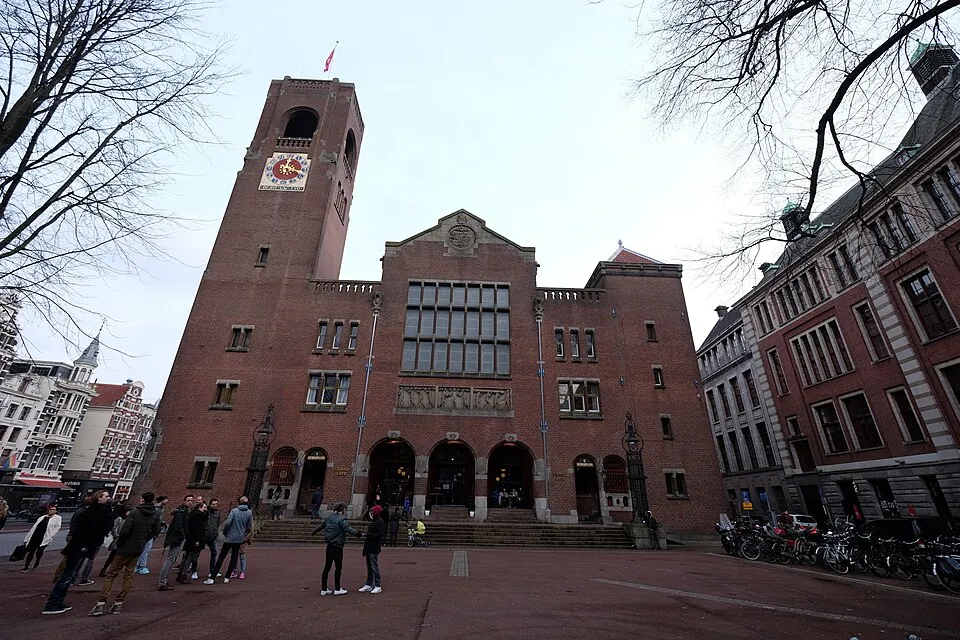
The building originally served as a commodities exchange. Its architecture represented a departure from the heavily decorated styles common in the 19th century. Berlage used brick, stone and clearly visible structural forms to create a more restrained design.
The former exchange stands on Damrak, between Amsterdam Central Station and Dam Square. It is no longer used as a stock or commodities exchange and now functions as an event and exhibition venue.
Spinoza Monument Amsterdam
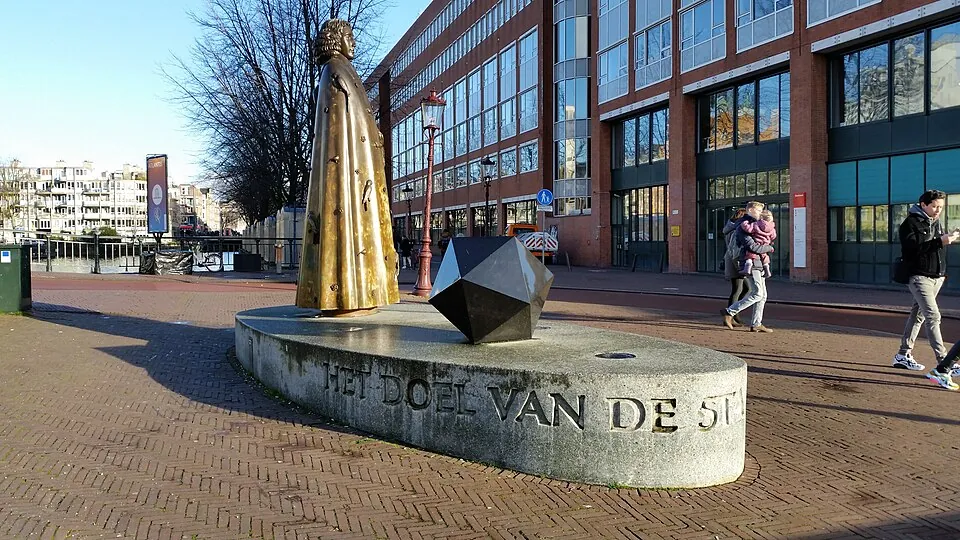
Artist Nicolas Dings created the monument, which was unveiled in 2008. The sculpture depicts Spinoza wearing a cloak decorated with symbols including roses and parakeets.
Its location is significant. Spinoza grew up in Amsterdam's Jewish community, in an area close to today's Waterlooplein. The monument connects the city's physical architecture with its intellectual and cultural history.
Amsterdam towers old and new
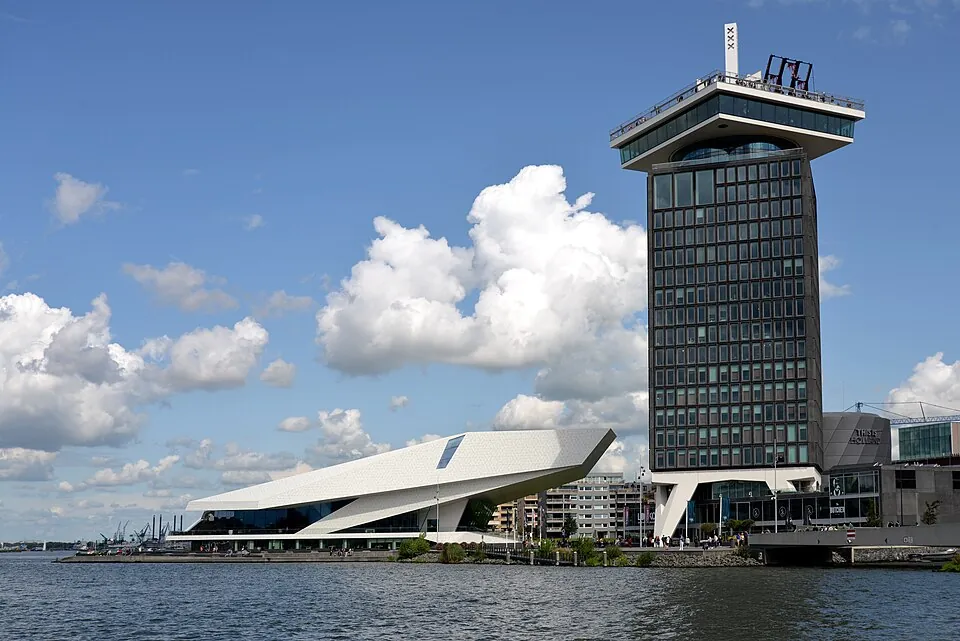
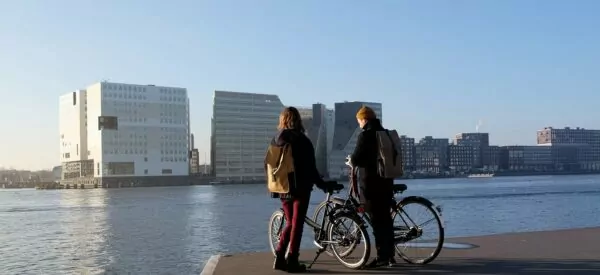
One prominent modern Amsterdam tower is A'DAM Tower, directly across the IJ from Amsterdam Central Station. The building was completed in 1971 as the headquarters of Royal Dutch Shell and was originally known as Toren Overhoeks. After redevelopment, it reopened as A'DAM Tower in 2016.
The contrast is easy to see from the waterfront. Looking back towards the centre reveals a skyline of church towers and historic roofs, while the northern side of the IJ contains larger and more modern structures.
A'DAM Tower is located in Amsterdam-Noord, one of the most distinctive areas outside the historic centre. If you want to explore more parts of the city, see our guide to the neighbourhoods of Amsterdam.
Architecture around the IJ
Visitors sometimes look for the "IJ lake" in Amsterdam, but the IJ is not simply a lake. It is a body of water that developed from a former bay and today forms an important part of Amsterdam's waterfront. It separates the historic centre from Amsterdam-Noord.For centuries, the IJ was closely connected to shipping and trade. The waterfront changed considerably when Amsterdam Central Station was built on artificial islands during the 19th century.
More recent development has added contemporary architecture to both sides of the water. This makes the IJ one of the clearest places to see the relationship between Amsterdam's maritime history and its modern architecture.
The free ferries behind Central Station make it easy to combine the historic centre with Amsterdam-Noord. Read our guide to getting around Amsterdam for more information about cycling, ferries and public transport.
Amsterdam Central Library
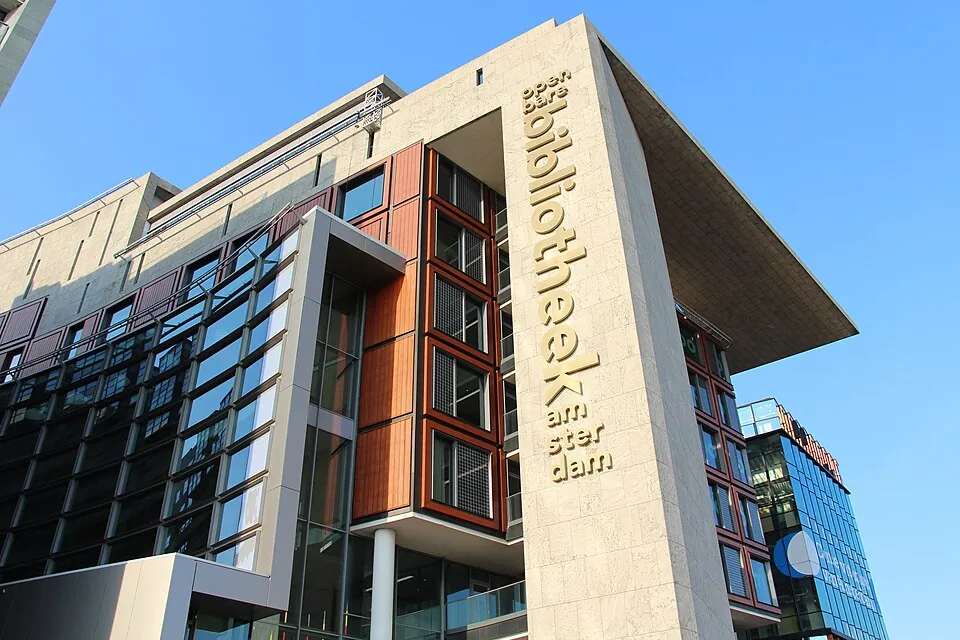
It stands on Oosterdok, a short distance from Amsterdam Central Station. Its large windows and open interior are very different from the narrow façades and enclosed rooms found in many historic canal houses.
The location is particularly interesting from an architectural perspective. Historic buildings in the centre are visible nearby, while Oosterdok contains several large modern cultural and public buildings.
Visitors who want to explore Oosterdok, the IJ and Amsterdam-Noord by bike can start close by at Black Bikes Amsterdam Central Station.
What about the Dutch parliament building?
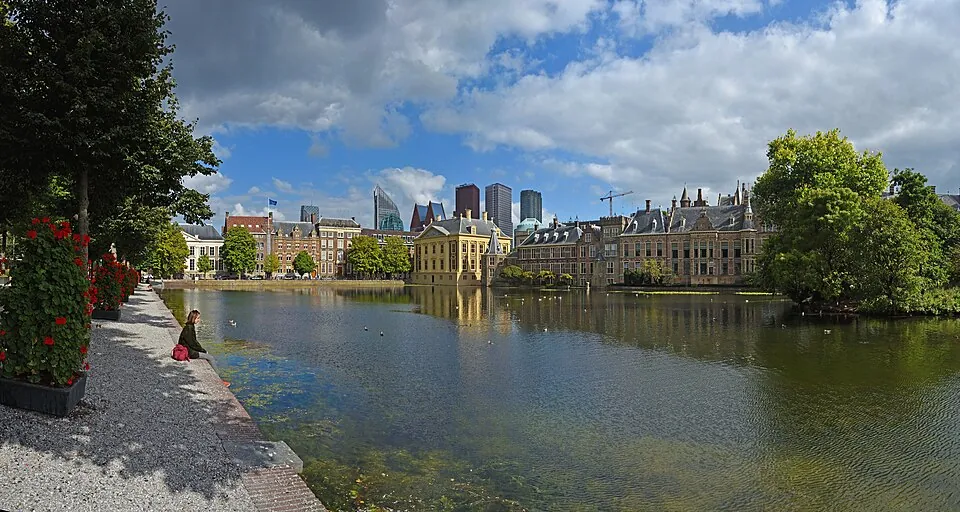
This distinction is important because Amsterdam is the constitutional capital of the Netherlands, while The Hague is the country's main seat of government. The national government, parliament and most ministries are based there.
Amsterdam does, however, contain many buildings connected with municipal government and Dutch history, including the former town hall on Dam Square and the current city hall on Waterlooplein.
The I amsterdam sign and city landmarks
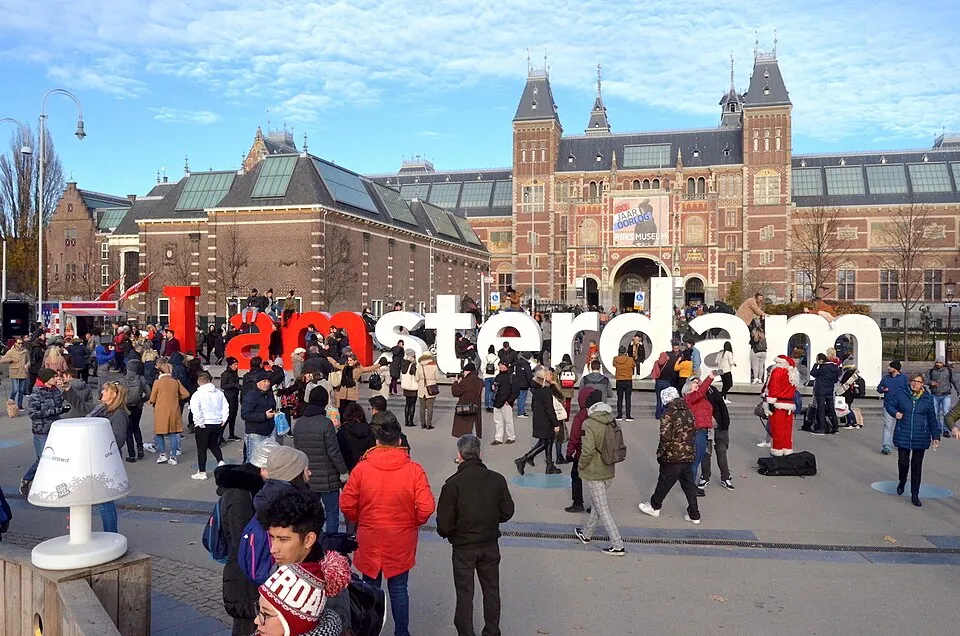
The letters were not a historical monument in the traditional sense. Their popularity nevertheless shows how the landmarks associated with a city can change. Amsterdam's identity is represented not only by centuries-old churches and canal houses, but also by modern architecture, public art and temporary installations.
Unique buildings in Amsterdam by bike
From the Oude Kerk, you can continue towards Dam Square and the former Stadhuis Amsterdam. Damrak leads past the Beurs van Berlage towards Central Station. From there, the free ferry provides access to Amsterdam-Noord and A'DAM Tower. Another route east from the station leads towards the Amsterdam Central Library and the modern architecture around Oosterdok.
For a ready-made route connecting historic and contemporary architecture, follow the Amsterdam Architecture Self-Guided Bike Tour. The route includes canal houses, Central Station, EYE Filmmuseum, NEMO and several examples of modern Amsterdam architecture.
Cycling between these places also makes the development of Amsterdam easier to understand. The streets, canals, bridges, squares and waterfront are part of the architectural story rather than simply the spaces between individual monuments.
Planning how to get from one landmark to the next? Our guide to getting around Amsterdam compares cycling, walking, the free ferries and public transport. For most of the buildings in this article, a bike is the quickest and most flexible way to travel between them.
Use a bike your entire stay