🏛️ Explore the Historic City Centre
Utrecht's historic centre is built around canals, narrow streets, squares and centuries-old buildings. The Dom Tower forms the main landmark, while the Oudegracht runs directly through the heart of the old city.
This central area is compact enough to explore on foot. Around the Oudegracht and Domplein, walking is often easier than cycling because many of the most interesting places are close together and you will probably want to stop regularly.
Small streets, bridges and courtyards connect the major sights, making it worth leaving the main shopping streets from time to time. You can cover a large part of the old centre without following a strict route.
🌊 Walk Along the Oudegracht and Utrecht's Wharves
The Oudegracht is one of Utrecht's most distinctive features. What makes it unusual is its two-level structure. Streets run above the water while lower wharves, known as
werven, sit directly beside the canal.
Historic wharf cellars open onto these lower walkways and many are now used as cafés, restaurants, shops and other businesses. This creates a canal environment that feels very different from Amsterdam.
Walking is the best way to experience this part of Utrecht. You can follow the canal, descend to the lower wharves, cross small bridges and stop at cafés or terraces directly beside the water.
The Oudegracht also gives you a useful sense of the city's layout. From here, many of Utrecht's main sights are only a short walk away.
⛪ Visit the Dom Tower, Domplein and DOMunder
The Dom Tower is Utrecht's best-known landmark and the highest church tower in the Netherlands. It stands at the historic heart of the city and is visible from many parts of the centre.
The surrounding Domplein connects several important streets and walking routes. From here, you can easily continue towards the Oudegracht, museums, shopping streets and quieter parts of the old city.
You can climb the Dom Tower for views across Utrecht or visit
DOMunder, an underground archaeological attraction beneath Domplein that explores around 2,000 years of local history.
Because the Dom Tower and Domplein are among Utrecht's most popular sights, this area tends to become busier during afternoons and weekends.
🖼️ Museums and Cultural Attractions
Utrecht has several distinctive museums that can easily be combined with sightseeing in the centre.
The
Centraal Museum focuses on art, design, fashion and the history of Utrecht. It is located south of the busiest part of the centre and fits naturally into a walk towards the Museum Quarter and Twijnstraat.
Close to the Dom Tower,
Museum Speelklok is dedicated to self-playing musical instruments, including musical clocks, music boxes and large street organs.
The
Railway Museum is slightly further from the central shopping streets and is a good example of where having a bike becomes useful. The museum combines railway history with historic trains, interactive exhibits and attractions.
By combining walking in the centre with cycling between attractions further apart, you can fit several cultural stops into one day without spending much time travelling.
🛍️ Shopping in Utrecht
Shopping in Utrecht stretches from the central station into the historic centre.
Directly beside Utrecht Central Station is Hoog Catharijne, a large indoor shopping centre with major brands, restaurants and longer opening hours.
Continue towards the old centre and the environment changes. Steenweg and the streets around the Oudegracht combine well-known brands with smaller stores, while areas such as Voorstraat have more independent shops, cafés and specialised businesses.
Twijnstraat, south of the central Oudegracht, has more of a neighbourhood atmosphere and is a good street to include if you are walking or cycling towards the Museum Quarter.
Because these shopping areas are relatively close together, it is usually easiest to park your bike and explore them on foot.
☕ Cafés, Restaurants and Canal Terraces
One of the best places to stop for food or drinks in Utrecht is along the lower wharves of the Oudegracht.
Many restaurants and cafés are located inside the historic wharf cellars, with terraces directly beside the canal. Sitting at water level gives you a completely different view of Utrecht compared with walking along the streets above.
The central Oudegracht has the largest concentration of canal-side terraces, but you can also find plenty of cafés and restaurants away from the busiest part of the centre.
Voorstraat, Twijnstraat and the area around Ledig Erf are useful places to explore if you want something that feels slightly more local.
🚲 Explore More of Utrecht by Bike
While the historic centre is compact enough to walk, cycling becomes much more useful as soon as you want to see more of Utrecht.
If you want to explore the city by bike, you can
rent a bike from Black Bikes in Utrecht and use it to combine the historic centre with neighbourhoods, parks and attractions further outside the old city.
A bike allows you to move quickly between neighbourhoods and attractions without having to rely on buses or trams. Utrecht has an extensive network of cycle lanes and cycling is a normal part of everyday transport throughout the city.
From the centre, you can easily cycle towards areas such as Wittevrouwen and the streets around Wilhelminapark. These neighbourhoods give you a better impression of everyday Utrecht beyond the historic centre.
You can also continue east towards the Rietveld Schröder House and Utrecht Science Park, or cycle south-east towards the greener areas around Amelisweerd.
These destinations are possible to reach using public transport, but a bike gives you much more flexibility and makes it easy to stop in neighbourhoods or parks along the way.
🌳 Parks and Green Areas by Bike
Cycling is also one of the easiest ways to combine Utrecht's historic centre with its greener surroundings.
Wilhelminapark is located east of the centre and is easy to reach by bike. The surrounding neighbourhoods are pleasant to cycle through and provide a quieter contrast to the streets around the Oudegracht.
If you have more time, continue further south-east towards Amelisweerd. This wooded area outside the dense city centre offers walking and cycling routes through a much greener landscape.
A trip like this shows why cycling can add so much to a visit to Utrecht. Within a relatively short ride, you can move from medieval streets and busy canals to residential neighbourhoods and countryside.
🏘️ Explore Utrecht's Neighbourhoods
You do not have to travel far from the centre to experience a different side of Utrecht.
South of the Oudegracht, the Museum Quarter contains quieter streets, historic buildings and attractions such as the Centraal Museum. Twijnstraat connects this part of the city with the area around Ledig Erf.
North-east of the centre, Wittevrouwen has a more residential character, with local cafés, shops and streets that receive fewer day visitors.
These areas can be reached on foot, but cycling makes it much easier to move between several neighbourhoods during the same day.
🚲 Getting Around Utrecht
The easiest way to explore Utrecht is often to combine walking and cycling rather than choosing only one.
Inside the historic centre, walking works especially well around the Oudegracht, Domplein and the main shopping streets. Distances are short, and you will often want to stop to visit shops, cafés or attractions.
For destinations outside the central area, cycling is usually much faster. Utrecht has extensive cycling infrastructure and most parts of the city are within a relatively short bike ride of the centre.
If you arrive by train, Utrecht Central Station brings you directly to the edge of the historic centre. From there, you can explore the central area first and use a bike when you want to continue further into the city.
🗺️ A One-Day Utrecht Route on Foot and by Bike
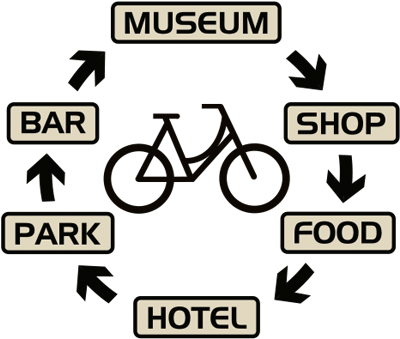
If you have one day in Utrecht, combining walking and cycling lets you see both the historic centre and parts of the wider city without rushing.
A simple route could be:
- Start near Utrecht Central Station
- Walk towards the Oudegracht and explore the historic wharves
- Continue to Domplein and the Dom Tower
- Visit DOMunder, Museum Speelklok or another central attraction
- Walk south through Twijnstraat and the Museum Quarter
- Pick up your bike and continue towards Ledig Erf and Wilhelminapark
- Cycle through Wittevrouwen or towards another neighbourhood outside the centre
- If you have enough time, extend your ride towards the Rietveld Schröder House, Utrecht Science Park or Amelisweerd
- Return to the centre for dinner or drinks beside the Oudegracht
This approach gives you time to explore the parts of Utrecht that are best experienced slowly while still using a bike to cover much more of the city than you could comfortably see on foot.
💡 Practical Tips for Visiting Utrecht
Utrecht works well without a strict schedule. Many of the main sights are close together, so you can easily change your route depending on the weather, crowds or which attractions you decide to visit.
If you prefer quieter streets and canals, start early or visit on a weekday. Weekend afternoons are generally busiest around the Oudegracht, Domplein and main shopping streets.
When cycling, remember that Utrecht is a busy cycling city rather than simply a tourist destination with bike lanes. Local cyclists often move quickly, so keep to the right, follow traffic lights and avoid stopping unexpectedly in cycle lanes.
It is also useful to park your bike before exploring the busiest parts of the historic centre. Walking around the Oudegracht and Domplein is often more convenient, while cycling is at its best when connecting these central sights with Utrecht's neighbourhoods, parks and attractions further away.
By combining both, you can experience Utrecht's historic centre at a relaxed pace while still seeing much more of the city in a single day.



 Nederlands
  Français
  Deutsch
  Italiano
  Español
  Português