 Nederlands
  Français
  Deutsch
  Italiano
  Español
  Português

Historical Context
De Wallen developed around the earliest settlement of Amsterdam near the Amstel River. Long before the construction of the famous 17th-century Canal Belt, this part of the city already contained houses, streets, waterways, churches, and businesses connected to Amsterdam's development as a trading town.The Oude Kerk stands at the historic heart of the neighbourhood and is Amsterdam's oldest surviving building. The church developed over several centuries and became one of the most important religious buildings in the medieval city.
De Wallen's location close to the waterfront and harbour strongly influenced its development. Sailors, merchants, workers, travellers, and immigrants passed through the area for centuries, contributing to its concentration of inns, drinking establishments, entertainment, and prostitution.
As Amsterdam expanded during the Dutch Golden Age, wealth increasingly moved towards the newly constructed Canal Belt. De Wallen nevertheless remained an important commercial and entertainment district and developed its own distinct identity within the growing city.
Today, different periods of Amsterdam's history remain visible throughout the neighbourhood. Medieval streets and churches sit alongside later canal houses, traditional cafés, modern businesses, museums, restaurants, and the windows for which the Red Light District became internationally famous.
Streets and Character
De Wallen has one of the most distinctive street patterns in Amsterdam. Narrow streets, alleys, small bridges, historic buildings, and canals are packed into a relatively small area, making the neighbourhood particularly suited to exploring on foot.The Oudezijds Voorburgwal and Oudezijds Achterburgwal are the two main canals running through the neighbourhood. Around them is a dense network of streets and alleys, with Oudekerksplein at the historic center of the area.
Zeedijk runs along the northeastern side of De Wallen and connects the area around Central Station with Nieuwmarkt. The street is also an important part of Amsterdam's Chinatown, giving this side of the neighbourhood a noticeably different character from the streets immediately around the Red Light District.
The atmosphere changes throughout the day. During the morning and afternoon, the historic buildings, canals, churches, shops, and residential character are more noticeable. In the evening, visitor numbers increase and the Red Light District and nightlife become much more prominent.
Main Attractions in De Wallen
The Oude Kerk is the most important historic landmark in De Wallen. Located on Oudekerksplein, it is Amsterdam's oldest surviving building and has stood at the center of the neighbourhood for centuries. Today, the building combines its historic and religious significance with exhibitions and contemporary art.Another important attraction is Museum Ons' Lieve Heer op Solder, or Our Lord in the Attic. Hidden inside a 17th-century canal house on the Oudezijds Voorburgwal is a remarkably well-preserved Catholic church constructed in the upper floors of the building. The museum provides an unusual insight into Amsterdam's religious and social history.
On the eastern edge of the neighbourhood, Nieuwmarkt is dominated by De Waag. Originally constructed as a medieval city gate, the building later served as a weighing house and guild building. Today, it remains one of the most recognizable historic structures in this part of Amsterdam.
De Wallen also contains several smaller museums in Amsterdam, including museums connected to the history and character of the Red Light District. Red Light Secrets, the Museum of Prostitution, focuses specifically on sex work and provides visitors with information about an industry that is usually only visible from the outside.
The Oude Kerk, nearby Waalse Kerk, and other historic religious buildings also make this part of the center particularly interesting for visitors exploring the churches of Amsterdam.
Restaurants, Cafés and Nightlife
De Wallen contains a large concentration of restaurants, cafés, bars, and late-night venues. The area's central location and long history as an entertainment district mean that activity continues from the morning until late at night.Zeedijk and the streets around Nieuwmarkt are particularly known for their diverse food scene. Amsterdam's Chinatown has brought a strong Asian influence to this part of the city, with Chinese, Thai, Indonesian, Vietnamese, and other Asian cuisines represented alongside Dutch cafés, bars, and restaurants.
Nieuwmarkt has numerous cafés and restaurants around the square, with terraces becoming particularly popular during warmer weather. Traditional brown cafés, pubs, and tasting rooms can also be found throughout the surrounding streets.
In the evening, the Red Light District becomes one of the busiest nightlife areas in Amsterdam. Bars, pubs, late-night venues, and large numbers of visitors fill the streets around the Oudezijds canals and Oudekerksplein. De Wallen has a distinctly different character from the club-focused nightlife around Leidseplein and Rembrandtplein, but it remains one of the best-known areas for nightlife in Amsterdam.
Shopping, Markets and Leisure Activities
Shopping in De Wallen is varied, ranging from tourist shops and convenience stores to independent retailers, specialist businesses, vintage shops, bookstores, galleries, and Asian supermarkets around Zeedijk and Chinatown.Nieuwmarkt regularly hosts market stalls, while the surrounding streets contain a mixture of local shops and food businesses. The covered Oudemanhuispoort passage, near the southern edge of the area, is also known for its second-hand book market.
Walking is one of the best ways to explore De Wallen. Distances are short, but the network of canals, bridges, alleys, and side streets means there is considerably more to discover than the neighbourhood's small size might suggest.
The waterways provide another perspective on the historic area. Some canal cruises in Amsterdam pass through or alongside the old city, providing views of its narrow canal houses, bridges, and waterfront streets from the water.
Character of the Area
De Wallen is one of the most unusual parts of Amsterdam because several very different sides of the city exist within a remarkably small area. It is simultaneously part of Amsterdam's medieval core, a residential neighbourhood, a major tourist destination, and the center of the city's famous Red Light District.Its international reputation can sometimes overshadow its historical importance. Exploring the area during the daytime reveals a neighbourhood of historic buildings, local businesses, religious sites, museums, restaurants, and residents, while the evening brings a much stronger focus on nightlife and the Red Light District.
Visitors should remember that people live and work throughout De Wallen and that sex workers working behind the windows should be treated with respect. Visitors should not photograph or film sex workers and should avoid blocking entrances, causing unnecessary noise, or interfering with residents and businesses.
The combination of medieval history, canals, architecture, museums, restaurants, nightlife, multicultural influences, and the Red Light District gives De Wallen an identity unlike anywhere else in Amsterdam. Looking beyond its international reputation reveals one of the oldest, most historically important, and most distinctive parts of the city.
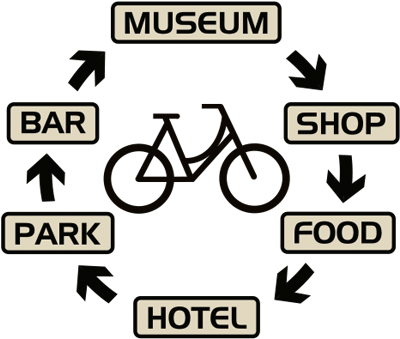
Use a bike your entire stay